Sikh Weddings
A Sikh wedding, also known as “Anand Karaj“, is a sacred and joyous ceremony that follows the traditions and teachings of Sikhism, a monotheistic religion founded in the Punjab region of India by Guru Nanak Dev Ji in the 15th century. Sikh weddings are characterized by their simplicity, spirituality, and focus on the principles of equality and community. Here’s an overview of the key elements and customs of a traditional Sikh wedding:
Akhand Path Sahib:
The wedding preparations often begin with the Akhand Path Sahib, a continuous reading of the Guru Granth Sahib (the Sikh holy scripture) to seek blessings. This can be done at the bride’s or groom’s home or at the Gurdwara (Sikh temple).
Roka and Kurmai:
These are pre-wedding ceremonies where the families exchange gifts, offer prayers, and formally announce the engagement. The Roka is the official engagement ceremony.
Mehndi(Mayaan) Ceremony:
Similar to Hindu weddings, the bride and other women in the family may have intricate henna designs (mehndi) applied to their hands and feet.
Arrival at the Gurdwara:
On the wedding day, the bride, groom, and their respective families and guests gather at the Gurdwara, the Sikh place of worship.
Milni:
This is the formal introduction and greeting of both families. It involves the exchange of garlands and gifts as a symbol of acceptance and unity.
Anand Karaj Ceremony:
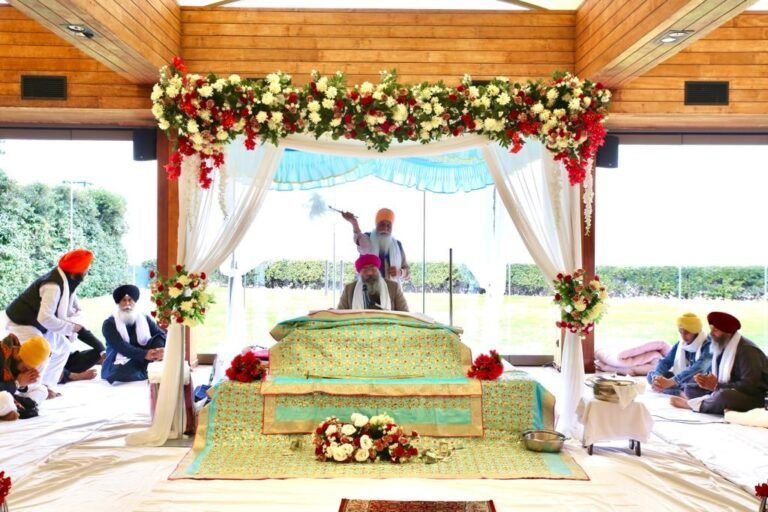
The heart of the Sikh wedding is the Anand Karaj ceremony, which takes place in the presence of the Guru Granth Sahib. Key aspects of this ceremony include:
- Kirtan: The ceremony begins with the singing of hymns (Kirtan) from the Guru Granth Sahib.
- Laavan: The couple takes four symbolic rounds around the Guru Granth Sahib, following the recitation of four hymns called “Laavan.” These hymns represent the stages of a married life and serve as vows for the couple.
- Ardas: A prayer (Ardas) is offered, seeking blessings for the couple’s new journey together.
- Prashad: After the ceremony, the congregation is offered sacred food (prashad).
Reception:
Following the Anand Karaj ceremony, a simple langar (community meal) is served at the Gurdwara for all attendees. A larger, more elaborate reception with a meal may follow at a separate venue.
Doli:
In some Sikh weddings, there is a custom called “Doli,” where the bride officially leaves her parental home and is bid farewell with blessings from her family.
Sikh weddings emphasize the equality of the bride and groom and the importance of community participation. The marriage ceremony itself is relatively simple and focuses on the spiritual union of the couple. Sikh weddings are a reflection of the core values and teachings of Sikhism, including humility, service, and devotion to the Guru.